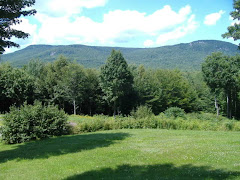
What follows is rather long, but it provides an excellent guide for municipalities who are facing potential wind turbine developments.
Municipal Regulation of Wind Power
(from Maine Townsman, March 2010)
by James N. Katsiaficas, Esq., Perkins Thompson
The combination of volatile oil prices and the need to reduce greenhouse gas emissions is leading consumers, business and government to seek alternatives to fossil fuels to generate electricity. One resource Maine has as an alternative to fossil fuels to generate electricity is wind. The Governor’s Task Force on Wind Power issued a report in 2008 identifying the significant land and offshore wind resources in the state. This report notes that wind power will be an important contributor to the state’s energy mix, and establishes wind-energy generation goals of 2,000 megawatts of installed capacity by 2015 and 3,000 megawatts of installed capacity by 2020, with approximately 300 megawatts from offshore wind and coastal waters. (By comparison, an average nuclear power plant generates about 1,000 megawatts.)
While the greater use of wind power to generate electricity may seem a viable alternative to fossil fuel electrical generation in Maine, as with any use, commercial wind power energy presents issues for Maine municipalities to address. The term “commercial wind power project” as used in this article means what the Governor’s Task Force Report refers to as “grid-scale” wind power development -- development that is large enough to trigger review under Maine’s Site Location of Development Act (“Site Law”), because it is a development that occupies 20 or more acres or has disturbed area, including structures, of three acres or more. Another definition of “commercial wind power project” would be a project that generates 100 kilowatts or more of electricity for sale or use by another party.
Some issues, such as whether commercial wind power is a desirable use at all, whether it is a cost-effective alternative to oil and to other alternative energy sources (such as hydropower) and whether the location of wind power projects near scenic vistas in western and eastern Maine is consistent with the preservation of Maine’s natural environment and surroundings and with the branding of Maine’s “sense of place,” are more global policy issues that are better addressed at the state and federal government levels.
Other, more site-specific issues are appropriately addressed at the municipal level. Assuming that wind power is a lawful use that has its place among the various land uses that might occur in Maine communities, this article focuses upon the more site-specific issues that are within the scope of municipal land-use review. For example, the movement of the sun through rotating turbine blades as seen from a nearby dwelling or business can produce the effect of alternating sunlight and darkness -- the phenomenon called “shadow flicker” -- for a period of time each day. Rotating turbine blades and the turbines themselves generate noise, both audible and low frequency (which may be felt as vibration). Snow and ice can be thrown from rotating turbine blades. In the unlikely event that a tower would fall, the site would need to accommodate its length in order to avoid harm to adjoining users, structures and properties. Also, there are impacts on the environment, from the development of large land areas for commercial wind power systems and from the effects of turbine blades on birds and bats. In addition, there is the impact of commercial wind power development on adjoining scenic and recreational resources.
As with the potential adverse impacts of any use, these are not reasons to prohibit commercial wind power development entirely from a community, but instead are reasons to responsibly regulate this use to ensure that it is compatible with other land use activities and uses in the municipality. This article reviews current federal and state regulation of commercial wind power and, as to municipal regulation, outlines potential local concerns, municipal regulatory authority and the planning, zoning and land use tools that can be implemented by exercising that municipal regulatory authority.
Federal and state regulation
Before discussing the details of municipal regulation of commercial wind power, it may be helpful to review regulation at the federal and state level.
There are several ways in which a commercial wind power development might be subject to federal regulation. Wind power projects on federal lands (and perhaps offshore projects) may require U.S. Environmental Protection Agency National Environmental Policy Act review, in the form of an environmental assessment or impact statement. Concerns about endangered species and migratory birds may require a U.S. Fish & Wildlife Service review; this agency has issued interim guidelines to protect wildlife resources and to streamline permitting. The Federal Aviation Administration requires approval for structures greater than 200 feet in height above ground level in order to avoid or minimize obstruction to navigable air space; its regulations also require appropriate lighting. If fill or dredging is necessary as part of a project, a U.S. Army Corps of Engineers permit may be required.
Please note that at present, nothing in federal law preempts or limits municipal regulation of wind power development. This is an important consideration. In many ways, the land use concerns regarding wind power are similar to those associated with cellular telephone towers but, while federal law bans municipal regulation of wireless facilities that prohibits or has the effect of prohibiting wireless communications, there is no such federal prohibition or restriction on municipal regulation of wind power development.
On the state level, several statutes and regulations might come into play with regard to commercial wind power projects. The Site Law most likely would be triggered by such a project. This would require an applicant to comply with the Site Law and the corresponding Maine Department of Environmental Protection (DEP) rules, including Chapters 375(10) (“Control of Noise”), 375(14), (“No Unreasonable Impact on Scenic Character”) and 375(15) (“Protection of Wildlife and Fisheries”). The Natural Resources Protection Act (NRPA) also can be triggered by development in fragile mountain areas, over or abutting stream crossings and abutting or near wetlands. In addition, if an area of an acre to more is disturbed by a project, a stormwater management permit may be necessary.
Also, Maine’s Legislature enacted a bill in 2008 implementing recommendations of the Governor’s Wind Power Task Force (P.L. 2007, c. 661) which streamlines review of wind power projects. In particular, it creates “expedited permit zones” which include virtually all of the organized areas of the State and that area of the unorganized and deorganized territories which LURC has zoned (approximately 1/4 to 1/3 of the townships in the unorganized and deorganized territories). Decisions by DEP and/or LURC generally are issued within 185 days of application (270 days if a public hearing is held). In these expedited permit zones, LURC and DEP review standards are amended, particularly with regard to protection of scenic resources and fitting harmoniously into the existing natural environment. This law explicitly provides that “This act is not intended to limit a municipality’s authority to regulate wind energy development.”
Municipal Regulation
What concerns does a commercial wind energy project raise that a municipality might want to regulate?
Many potential local concerns involve the location of commercial wind power projects. These include safety of uses and activities on the same and on adjacent property, fall-down zones, shadow flicker, wind access and conflicts between incompatible uses. Failure to appropriately site projects and to provide adequate setbacks from adjoining buildings and properties may result in adverse impacts on neighbors. Here are some of the local concerns that may arise:
Turbine blades can be up to 100 feet in length. Therefore, moving blades can throw ice great distances. Also, severe weather conditions may cause catastrophic turbine failure and in the event of turbine failure, blades may be thrown great distances. Therefore, turbines should be equipped with automatic and manual emergency shut-offs, grounded to avoid lightning damage. Turbines should have appropriate ground clearance and, because they may be attractive to would-be climbers, they should not be climbable. Turbine doors should be locked and fencing or other measures should be considered to limit access to the site. Certification of safety of structural, electrical and rotor components by a qualified engineer may be required before operations can commence.

A falling tower could cause damage to the same or adjoining property, thus requiring “fall down zones” equal to or greater than the combined length of tower and blades.
A municipality may require tower owners/operators to obtain and maintain general liability insurance.
Regulations may specify tower structure type, such as monopoles.
Shadow flicker can be disorienting to neighbors. DEP is working with a nationally recognized limit of no more 30 hours of shadow flicker per year (assuming the same period of sunlight and shadow flicker occurs each day). Shadow flicker also may be minimized by specifying minimum distances between turbines and dwellings.
Wind access is necessary to the proper operation of a wind tower and turbine, but may be impaired by buildings and structures constructed by adjacent landowners.
There also are concerns about the aesthetics of towers, turbines and blades. Turbines may impair scenic views if improperly located.
Regulations may require towers, turbines and turbine blades to be painted a non-obtrusive, non-reflective color such as white or gray to avoid or mitigate negative visual impacts.
Wind tower projects can generate noise as well as power. Some of this is audible noise, and some is low-frequency noise that is felt as vibrations. Many variables can affect noise impacts on nearby residents; impacts may affect areas for several thousand feet or even several miles.
Regulatory limits might address general audible noise as well as “low frequency” or “infrasound” noise and might set noise limits at the boundary of adjoining properties. Turbine noise may be minimized by specifying minimum distances between turbines and dwellings
Possible solutions include: noise modeling in advance and/or post-construction impact studies; establishing a noise complaint-resolution program; shutdown of turbines or restrictions on maximum turbine speeds during certain times; or, other mitigating measures, if post-construction noise studies show unreasonable adverse impacts.
Municipalities might seek to avoid unreasonable adverse impact on wildlife.
To minimize bird collisions, projects may be sited to avoid nesting, feeding and roosting areas and located away from migratory bat and bird habitat.
Applicants may agree to post-construction impact studies to monitor any negative impacts on wildlife and follow up actions, such as operational changes, to address these negative impacts.
Towers may be abandoned at some time in the future. Municipalities may wish to require turbine removal and site restoration upon facility abandonment, and may require a tower owner/operator to post a performance guaranty (bond, cash escrow or irrevocable letter of credit) to ensure funds for the same.
Local regulation could prohibit the location of signs and lights on towers (except as required by the FAA).
The cost of municipal project review of these projects may be substantial. Therefore, any municipal regulations should include appropriate application fees, as well as the standard engineering/consulting/legal peer review escrows to ensure sufficient funding for adequate expert review of applications.
Finally, a proposed commercial wind power project may raise the same land use issues and concerns as any other commercial or industrial land use, including: vehicular access; buildings and accessory structures; stormwater; solid waste; septic; and, general compliance with municipal zoning and shoreland zoning ordinances.
What regulatory authority does a city or town have to address these commercial wind power project concerns?
Three basic sources of municipal authority in Maine permit local regulation of commercial wind power development: zoning ordinance authority, police power authority and home rule ordinance authority. State law specifically authorizes a municipality to enact zoning ordinances, which allow it to divide the municipality into districts and to prescribe and apply different regulations in each district. Such ordinances must be consistent with the comprehensive plan. In addition, municipalities have the inherent police power authority to regulate activities to protect the public health, safety and welfare. Finally, Maine municipalities enjoy statutory home rule authority to enact ordinances to “exercise any power or function which the Legislature has power to confer upon it, which is not denied either expressly or by clear implication, and exercise any power or function granted to the municipality by the Constitution of Maine, general law, or charter.” The typical municipal “Site Plan Review” ordinance is an example of a common home rule land use ordinance.
How can municipalities address their concerns?
Comprehensive Plan Zoning/Planning Ordinance Enactment or Amendment. A municipality can take the proactive step of locating appropriate areas where commercial wind power projects fit in the community by amending the comprehensive plan, zoning ordinance and zoning map accordingly. It then can enact reasonable regulations in the zoning ordinance to allow commercial wind power project review, either by performance standards to be applied in site plan review or by a separate wind power section. This is a complete approach that would give the municipality the greatest latitude in regulating the location of and standards for such development.
As part of this complete approach, a municipality could amend its comprehensive plan and zoning ordinance to provide for the use as: (1) a permitted use within specific zoning districts; (2) a conditional use or special exception use within certain zoning district(s); or (3) within overlay district(s), which would allow the municipality to designate places in municipality where development of wind projects is deemed appropriate, regardless of existing zoning district boundaries. Because existing zoning ordinance height limits may prohibit all wind power turbines within the municipality; ordinance height restrictions may need to be amended for wind projects.
In addition to addressing the location of wind power projects, a municipality also could amend its zoning ordinance to include performance standards for commercial wind power uses and facilities in order to address specific land use concerns. The ordinance might require these performance standards to be addressed through site-plan review or special exception/conditional use review, or might include these standards as part of a commercial wind power review section.
Also, whether the commercial wind power use is a permitted use, a special exception or conditional use or one allowed only in overlay districts, a municipality can amend its zoning ordinance to require site plan review for wind energy development, to address general development concerns that might apply to any development. These general concerns may be vehicular access, stormwater management, solid waste disposal, septic systems and compliance with general zoning dimensional standards.
Stand-Alone Site Plan Ordinance. Alternatively, a municipality simply can enact a stand-alone site plan ordinance or commercial wind power ordinance to regulate such projects without having to enact a comprehensive plan, zoning ordinance and zoning map. The Maine State Planning Office has prepared a Model Wind Energy Facility Ordinance (available online at http://www.maine.gov/spo/landuse/docs/ModelWindEnergyFacilityOrdinance.doc) that may be enacted on its own or may be integrated into an existing zoning ordinance. However, enactment of a stand-alone wind power ordinance without also enacting a comprehensive plan, zoning ordinance and zoning map means that a commercial wind power project could be located anywhere within the municipality, so long as it meets the standards in the wind power ordinance. Thus, this form of regulation may not provide the desired level of local control over the location of a wind power project.
Moratorium. Finally, in the absence of any land use ordinances to regulate a commercial wind power project, a municipality can enact a temporary moratorium ordinance if it finds that the municipality’s current ordinances are inadequate to protect the public from serious public harm from such development. However, this is only a temporary remedy that allows the municipality time to develop and enact the necessary ordinances, and a moratorium ordinance should not be used to prohibit or indefinitely delay a proposed commercial wind power project.
(This article is based on a presentation made by the author at Androscoggin Valley Council of Government’s Planning Day, Nov. 5, 2009.)