Showing posts with label Mars Hill. Show all posts

Wednesday, March 2, 2011

Sitting Cows (i.e. How Close are the Neighbors?)


Below is a quote from Angus King, a 'principal' of Highland Wind LLC, which proposes to build a 39 turbine grid-scale industrial wind facility on the five mountains in rural Highland Planatation...despite massive opposition from many of the locals.

"...how close are the neighbors? That's a big factor and one of the great things about the Highland site is that-- there are 2 camps....summer cottages on the side of one of the mountains that are about 1/2 mile from the nearest turbine. Other than those, NOBODY is within a mile or a mile and a half of the turbines,... except for those two camps, the closest people to Highland are 6,000 feet. The people at Mars Hill are 1,000 feet. That's the difference--- a huge difference! The issue about sound. It's just like a truck going by on 201. If they're 100 yards away, they're louder than hell. If they're a mile away-- you're not gonna hear them. That's how sound works. It's a question of distance. The simplest way to think of it that I've come up with... if someone builds a turbine today in Seattle, Washington, I think we'd agree that no one in Skowhegan would be bothered by it. If we put one right by where the basketball courts are-- you'd hear it. So that means the only question is-- what's the right distance between Seattle and the basketball courts? And the answer is, based on Mars Hill and wind projects around the world is-- about 1/2 mile. Depending upon the wind, topography.... 2-3,000 feet, you're not gonna hear them.

Here's a quote from a resident in Mars Hill--that northern Maine town that Mr. King references as having residents living only 1,000 feet away from the wind facility...

"The closest resident is about 900 feet, the next closest is 1200 feet, the next 1400, the next 2 at about 1600 feet, one at 1800 feet, about 4... are at about 24 - 2600 feet, two more at about 3000 feet, two more at about 34 -3600 feet and one at about 4000 feet. The turbines keep many of us awake at night. I know that the house at 3600 feet has nights of disturbed sleep and the woman of the house gets migraines (turbines make them worse)."

Angus King's words, again:

"And by the way, what you hear from these things.... somebody wrote in about "The roar of the turbines" Come on! There's no noise at all from the machine. The machinery, the gears and stuff are all enclosed in this sound-proof box. You could stand from here to that wall and not hear that.


"There's not a sound issue, there's not a health issue, there's not a bird issue, there's not a wildlife issue-- if you want to see the effects of wind turbines on wildlife... on animals... go to... google image...put in 'wind turbines cows' and you'll see hundreds of pictures of wind turbines and cows sitting around underneath them... completely unconcerned, doing whatever it is cows do....."


Well. All else aside-- I don't believe that cows are known for 'sitting'. But I could be wrong.

And so could Angus King. I have spoken to people who live much further away from a turbine development than one-half mile who are very affected by the unmistakable high, low and ultra-low frequency noises. Mr. King is famous for trivializing 'wind's' affects on those who live within a wind development's shadow. It's time that he, and other wind developers, took responsibility for the negative affects of these industrial facilities.

This is also a quote from our former governor:

"The neat thing about Highland-- except for those two camps, everybody else is twice the safe distance away. And the two camps, from talking to the people in Mars Hill... It's winter time, that's the problem... because you don't have the leaves on the trees, and that's when you hear them. The camps are summer camps. I think it's very unlikely that they'll have a problem. We're legally responsible for not creating a problem."

Those are Mr. King's own words. He admits that he's "legally responsible for not creating a problem." That's good to know.

That's good to know, because industrial wind developments are riddled with problems--here in Maine and around the globe. At least three of Maine's new industrial wind facilities are embroiled in disputes at the current time. And if Mainers are not able to call a time-out-- if we cannot call upon our legislators to take a measured and practical approach to the current proliferation of grid-scale wind facilities on our mountains-- then I predict that there will be many, many more conflicts and lawsuits.

This can be avoided. There are bills pending before the Maine Legislature which are designed to give experts the necessary time to study the true impacts of industrial wind. To determine whether those perceived benefits outlined in the preamble to the 'expedited wind law' are justifiable. To determine, using scientific methods, whether or not they are true.

The FACTS will speak for themselves... just like Mr. King speaks for himself.

***********************
Shown in photos, above: Blue-- a 'cow' from The F.A.R.M.
Perrin and Wendy Todd, Mars Hill, Maine
Greg and Jenn Perkins, Highland Plantation, Maine
Heidi and Justin Emery, Highland Plantation, Maine
Art and Cheryl Lindgren, Vinalhaven Island, Maine
Dan Bell, Highland Plantation, Maine

Sunday, January 16, 2011

Propaganda, Rhetoric and Hype


Propaganda, rhetoric and hype. These are tactics used by the wind lobby to ‘sell’ their product. I’ve seen evidence of it ever since I began paying attention to their PR campaigns—a diligence I began almost 15 months ago. The wind lobby is professional, and their ‘spin’ has been expertly handled. Their propaganda is believable, if one doesn’t look beyond the surface to see the facts.

Today, I acquired a copy of a document which drives home the depths to which the wind lobby will sink to gain support.

Following are quotes from a document titled “Mars Hill, Maine Wind Energy Farm, The Most Commonly Asked Questions…”

Mars Hill, in Aroostook County, is home to Maine’s oldest wind energy facility. This grid-scale project is owned and operated by First Wind, aka UPC wind partners, aka Evergreen Wind Power.

Mars Hill was the testing ground for industrial wind in Maine. The ‘guinea pig’, I suppose. Mainers had no concept of ‘wind’ when this development was proposed, and surely, the residents of this town in our northernmost county didn’t know when—or IF—they were being ‘shined’. I would not be surprised if the residents of Mars Hill took these words from First Wind to heart, believing them without question.

“There is virtually NO mechanical noise from these turbines. If you are near a turbine, you may hear the sound of the wind and the ‘swooshing’ sound made by the slowly turning blade parting the air. If the wind is blowing, the background noise of wind in the trees is likely the only sound you will likely hear! You will not be able to hear any noise at all at the bottom of the mountain.”

“These turbines turn very slowly, rotating 10-20 rpm! That means it takes 6 seconds to the fastest 3 seconds to complete a rotation! Numerous studies have been done around the world and have found no significant adverse affects of monopole towers and slow rotation blades on birds or other wildlife in this type of environment. Your car or the picture window on your house will likely kill more birds than a wind turbine will!”

“All of the electricity from the Mars Hill “wind farm” will be used in the region, most likely by Aroostook County homes and businesses. Power will be delivered to Maine Public Service (MPS) and the “grid”. Other interconnection options are being considered.”

“The estimated cost/investment will be $55,000.000.00. It is paid for by private investments of UPC wind partners, the parent company of Evergreen Wind Power. The town of Mars Hill will be a major beneficiary of the project and will pay nothing for its development but receive major economic and social benefits.”

“The construction work will be by local businesses if possible and certainly from people and companies from within Maine.”

“One tourist bureau, at a similar wind farm, reported an increase of visitors to their town of over 60,000 per year. The town of Mars Hill could be a very busy place after construction, too!”

“According to Governor John Baldacci’s office of Renewable and Energy Independence the annual Contribution of annual reduction of air pollution offsets (Based on United States average power generation:

120,000 Tons Carbon Dioxide (Contributed to “global warming” or “greenhouse” Effect.) This is the equivalent of removing exhaust emissions of >17,000 automobiles.”

I have quoted these bullet points in context. I’ve copied the exclamation points, the misspellings, and the awkwardly structured sentences.

I’ve also tossed my head, rolled my eyes, gritted my teeth, and sighed.

We’ve learned so much since the days when Industrial Wind first came to Maine.

But have we learned enough, and will our education have come too late to save other communities from the same fate as Mars Hill?

Those turbines which produce ‘virtually no mechanical noise’? Currently, there are a dozen families in Mars Hill embroiled in lawsuits with First Wind, due to the health and quality-of-life impacts brought on by the turbines atop this ridge.

Those ‘monopole towers and slow rotation blades’? Those slow rotations can be up to 180 miles per hour at the tips. Yes, the ‘rpm’ number sounds low, but when those blades sweep an acre and a half of airspace with each revolution, they are hardly benign. And a quick Google search will show exactly how gently industrial wind turbines treat raptors, song birds, and bats.

The Bentec Study from Colorado showed that wind energy facilities do not, in fact, significantly reduce carbon emissions, and may actually increase them. This study was performed at request of a petroleum company, so the wind lobby likes to discount it. However, it was verified by independent scientists, and other, similar studies tell the same story. Seventeen thousand automobiles? Give me a break…

And wouldn’t it be interesting to see if Mars Hill has seen their number of tourists increase by 60,000 per year? It’s a fact: many people do travel to Mars Hill. The wind facility has gained notoriety as the Maine Wind Wars have heated up, and folks want to see what all the fuss is about. But 60,000 per year? Not a chance. And once 350 miles of Maine’s irreplaceable mountain summits are littered with these 40-story machines, the novelty will wear off. What pulls tourists here from around the world will be gone forever. Maine’s unique ‘quality of place’ will be a thing of the past.


Propaganda, rhetoric and hype. When will Mainers learn to separate the wind lobby’s sales pitch from the facts about industrial wind?

**************************
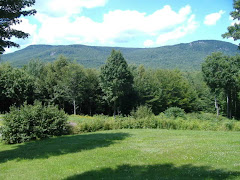
All photos are of Mars Hill, Maine