Showing posts with label Peter Watt. Show all posts

Monday, July 4, 2011

Coming Soon: "The Pacific", by Australian Author Peter Watt


     Australian writer and adventurist Peter Watt is one of my favorite authors . In addition, I am fortunate to be able to call him a very good friend. And so, it gives me great pleasure to announce the imminent release of another historical novel by this fantastic story-teller. The Pacific will be released this coming November, and I can't wait to read it.
     If you have not yet had the opportunity to read and enjoy the ongoing dramas of the MacIntoshes and Duffys, the Kellys and the Manns--don't delay! I recommend you begin with Cry of the Curlew and follow the adventures of these unforgettable characters from the very beginning, when the ancient continent of Australia was being populated by immigrants who were jostling to make their mark on the land. It's a treat you shouldn't deny yourself.
     I recently finished reading To Ride the Wind, so stay tuned for a review of Pete's most recent novel. It was every bit as good as those which preceded it. My only complaint? My teenaged daughter, Josie-Earl, decided to read it at the same time, and I constantly had to hunt for where I'd last left-off, as the darling girl would move my book-mark. It was a minor aggravation, but it was nice to be able to talk about the adventue as we read it together.
     Here is a blurb about The Pacific. Make sure you get a copy when it becomes available-- and if you'd like to have yours autographed by the author, just go to Pete's website and order one directly from my Aussie mate. His penmanship isn't half-bad!
                                          
As a war correspondent covering the Second World War, Ilsa Stahl isn’t afraid to be on the front line. But when her plane goes down in a terrible storm over Papuan waters and she is taken prisoner by the Japanese, she has every reason to be terrified. Particularly as they plan to hand her over to the Nazis.

When Jack Kelly discovers that his only daughter has fallen into the hands of the enemy, he will stop at nothing to save her. Even if it means risking the life of his only son, Lukas. No one knows Papua the way they do, they may be Ilsa’s only hope but time is running out.

Meanwhile, Major Karl Mann is sent on a secret mission to Indo China that will see him embroiled in Ilsa’s rescue mission in ways he could never have imagined.

This sweeping saga continues the story of the Kellys and Manns, following Peter Watt’s much-loved characters as they fight to survive one of the most devastating conflicts in history – the war on Australia’s back doorstep.

Wednesday, January 20, 2010

To Touch the Clouds


Author Peter Watt’s knowledge of the history of his native Australia infuses his novels with authenticity. I first met Peter last year. A friend of mine had attended a writing seminar that the author was conducting, and when my pal learned that I loved Wilbur Smith’s novels, he recommended I give Peter Watt’s a try. That is one recommendation I’m very glad I followed!

To Touch the Clouds is the latest chapter in the ongoing saga of the Duffy and Macintosh clans. The tale began in Cry of the Curlew, and the opening scenes of that novel were gripping. The government-sanctioned massacre of a tribe of native Australians was openly supported by one immigrant family, and the other was caught in the crossfire. That tragic event was the catalyst for hostilities between the two families which would last for generations. Some thought it was more than the terrible crime of a bygone day which kept the feud and the bad luck going. Some remembered the curse, and believed.

In To Touch the Clouds, cousins Alexander Macintosh and Michael Duffy are sent to German controlled New Guinea on an undercover mission. The Macintoshes have extensive business dealings with the Germans but as Europe balances on the precipice of war, suspicions abound. What these cousins don’t realize is that they are being betrayed by someone very close to them. Who is plotting their failure and deaths? Is it Yank, New Zealander, German cousin, or perhaps another Australian? And will their mission succeed, or will their lives or freedom be forfeited? And what will become of Alexander’s troubled sister Fenella, who is suspected of murder? The author keeps his readers guessing until the very end.

I have been privileged to read several of Peter Watt’s novels thus far, and as in the others, this story is full of engaging characters with very human qualities. Interwoven in this story are tales of passionate love between man and woman, and the fierce love of parent for child. There are hate-filled plots and humorous anecdotes of friendship. Peter has the ability to convey real emotion; whether love, loathing, contempt, greed or camaraderie. He is gifted with insight into the inner workings of both the male psyche and the mind of a woman. As his friend, I can tell you truthfully that this author has keen intuition. Peter knows people, and that is the first and most telling mark of an excellent writer. When his familiarity with the histories of Australia and New Guinea are added to the mix, To Touch the Clouds is guaranteed not to disappoint the reader. Although this novel stands on its own, I recommend you read the whole Duffy/Macintosh series from start to finish if you get the chance. And don’t despair. A little bird told me there is yet another episode in the works. I can’t wait, for more than the obvious reason.

I’ve been promised a nice long letter when it’s done!

Saturday, October 31, 2009

An Australian Saga Continues


Today, I thought it was appropriate to review a novel written by a friend of mine. Why today, you ask? Well, today (November 1, 2009) is the official release of his most recent work, To Touch the Clouds. And the author’s name? Peter Watt.

As much as I would love to write about his latest novel, I can’t. I haven’t read it yet. I intend to…in fact, friend Peter has told me it is winging its way from Australia to me as I write this. And that has me very excited!


I hope you avid readers will keep watch here on GAG, for as soon as I have my grubby little mitts on To Touch the Clouds, I intend to read it from cover to cover. And then… I’ll tell you how much I like it! Or, knowing author Peter Watt… how much I LOVE it.

In the meantime, I’m going to do something that probably seems a little bass-ackwards. But if you’ll bear with me, you’ll see that there’s a method to my madness. (If I tell you that often enough, you’re bound to believe me! Ah, the power of suggestion...) What I’m going to do is tell you a bit about Cry of the Curlew.

Cry of the Curlew is the very first Peter Watt novel I ever read. It is also the first book in the Macintosh/Duffy series, and since To Touch the Clouds is the most recent chapter, I thought it was appropriate to write about the book where-in it all began. What a great way, I thought, to lead in to his new saga!

The backwards part comes from the fact that Cry of the Curlew is not a new novel, but rather, one that has been in publication for several years. I am sure that when it was originally released, COTC was reviewed over and over again by professionals--extraordinary journalists who knew what they are doing as they touted this epic adventure set in 19th century Australia. In contrast, I am NOT a literary commentator or a member of the press. I’m just a humble author of Young Adult fiction and a columnist who writes country tales from Maine.

However, I am a woman who is not afraid of a challenge! Let’s not forget…I have teenagers in the house. Nothing, but nothing, is as intimidating as that! If I can stand in the path of a constant barrage of adolescent hormones and pubescent attitude without flinching, then surely I can attempt to write a review of a book that, while not newly published, is a refreshing read, nonetheless.

A piece of cake!

I was pointed in Peter’s direction by my pal Jack. He knew that I was a fan of Wilbur Smith novels, and he suggested I try a tale by Mr. Watt, whose writing and talent has often been compared to that great author’s. And since I always do what my friend Jack tells me to (unless, of course, he’s WRONG) I went to Amazon.com and ordered Cry of the Curlew.

And boy, am I glad that I did!


Cry of the Curlew is a fictional account of two diverse families who are making their mark on a young country. A country as harsh and unforgiving as any on this planet. A land of great beauty and tremendous danger. Australia, a continent of extremes, was a siren for strong men who wanted a new start, or a chance at fame, or glory, or sometimes—anonymity.

Much like the wild west of American fame, the Australian frontier was a place where white settlers took it upon themselves to impose their own laws and ways of life on a land and a populace that did not need or want them. The natives of Australia were treated as second-class citizens by many of those who came to occupy their tribal lands. Worse, they were sometimes dealt with as if they were less than human. Without value. Even, sometimes… disposable.

Cry of the Curlew opens to just such a scene. Donald Macintosh, a wealthy landowner, has issued orders. The Nerambura tribe is to be ‘dispersed’. To some, that word means scattered or disbanded. But to Lt. Morrison Mort and his Native Mounted Police, it meant annihilated. When Patrick Duffy and his son Tom witness the slaughter, the father is murdered and the son goes on the run, an outcast from his own people. Disillusioned by the brutality of his own race, and accepted by a small band of aboriginals, he makes it his mission to even the score.

The conflict between the two families is not restricted to Donald Macintosh and Tom Duffy, however, as loyalty and devotion are strong sentiments in these immigrant families. Each family takes it upon themselves to see the other brought low. And for some, the depths to which they will go to achieve that end are unimaginable.

Cry of the Curlew is a novel--a fictitious tale--but the reader can glean much about the history of Queensland as Peter Watt weaves events from its past into the daily drama of his central characters. Not only does this saga have an authentic feel, but the individuals themselves are as mortal as can be. One of the qualities that most impressed me about the author’s writing is that he lets the reader see the humanity in each personality showcased between the book’s covers. Not one of them is perfect, not one—completely imperfect. Goodness and evil…all men have a dose of each.

And Peter Watt knows that.

In Cry of the Curlew, he shows us just what happens when individuals not only war with each other, but wage a battle within themselves.

***************************
The Pete Watt I know is a family man, a writer and a friend. But to do him justice, below is a bit of additional information pulled from his website. I didn’t ask permission to copy and paste this because I know that today, he’s busy launching To Touch the Clouds. But I’m going to chance it and include this blurb anyway. I’m brave, after all! Remember… I have TEENAGERS in the house!

Peter Watt has spent time as a soldier, articled clerk, prawn trawler deckhand, builder's labourer, pipe layer, real estate salesman, private investigator, police sergeant and advisor to the Royal Papua New Guinea Constabulary. He speaks, reads and writes Vietnamese and Pidgin. He now lives at Maclean, on the Clarence River in northern New South Wales. Fishing and the vast open spaces of outback Queensland are his main interests in life.

To Touch the Clouds (Release November 2009)

'They had all forgotten the curse … except one ... until it touched them. I will tell you of those times when the whitefella touched the clouds and lightning came down on the earth for many years.’

In 1914, the storm clouds of war are gathering. Matthew Duffy and his cousin Alexander Macintosh are sent by Colonel Patrick Duffy to conduct reconnaissance in German-controlled New Guinea. At the same time, Alexander's sister, Fenella, is making a name for herself in the burgeoning Australian film industry.

But someone close to them has an agenda of his own - someone who would betray not only his family but his country to satisfy his greed and lust for power. As the world teeters on the brink of conflict, one family is plunged into a nightmare of murder, drugs, treachery and treason.

To Touch the Clouds is a powerful continuation of Peter Watt's much-loved saga of the Duffy and Macintosh clan, begun in The Cry of the Curlew.

**********************************
The photo above is of three of Peter Watt’s novels, which he generously autographed and donated to my small, hometown library in New Portland, Maine. (No novels were set on fire in the taking of this photograph.)

Thursday, September 24, 2009

And so, we hear from Jack...


I’m Karen Bessey Pease, and I have a friend who’s an exceptional writer. Jack has authored some outstanding fiction, and I’ve had the privilege of reading two of his novels. Neither of them is a light-hearted read, but Jack most definitely has a fun-loving and playful side. He has a terrific sense of humor, and I’ve rarely met anyone I warmed to as quickly as I did to this Scotsman who is abiding Down Under. Jack is an occasional contributor to ‘Observations from The F.A.R.M. (Fresh Air and Room to Move)’, and I thought it would be fun to share his first column run by our little western Maine newspaper back in April of this year.

**************

I’m Jack Ramsay, and I’m a gullible idiot.

There. I thought I’d best start with honesty. I’m also a husband, a writer (of the most frustrated kind), a pen-pal (to your very own, the magnificent Karen Bessey Pease) and an immigrant to Australia. But, back to the idiot thing, if you’ll indulge me.

An idiot, if dictionaries are to be believed, is a layman; a stupid person. But some definitions go further and describe me –sorry, ‘idiots’ – as having an intelligence quotient of less than twenty-five. Okay, so I might have an IQ slightly higher than that, but having the combined brainpower of six idiots, in my book at least, still makes me an idiot. ‘Gullible’, of course, isn’t in any dictionary.

Such claims are all very well, in a ‘Saturday night after a few beers with the boys’ kind of way, but I have irrefutable evidence stretching over many years to corroborate my assertion. The examples are many, and the good Lord knows they’re varied in the extreme, but let me take you back to the day I first realized just what it takes to secure the title of ‘idiot of all he surveys’.

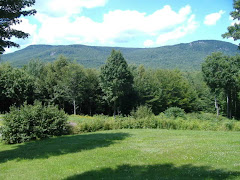
I grew up in Scotland, on a farm that nestles in the foothills of the Ochil Mountains near Perth, gateway to the Highlands. Okay, truth time again, they’re Hills. But if you stand at the bottom and look up, knowing you have to get to the top, they’re pretty daunting in a grassy, rounded, picnic-on-a-Sunday kind of way. Sounds like Maine, though, doesn’t it? Looks like Maine, too.

Although I was still in school (junior high, I think you’d call it), after class I’d hang around the smoky little bothy where my dad and a few of the farm men retreated to fix their machinery when it broke, as it often did in winter when it’s too cold and rainy and mucky to be outside.

One afternoon at the end of March I was sitting on my favorite five gallon drum, ignoring the wrestling rats in the corner and trying my hardest to emulate my peers – drinking overly sweet tea that had been stewing on the fire since breakfast, laughing at the right times and nodding at the wisdom spouting forth from such admirable fellows – when something Grieg the Grieve said made my ears prick up (he was the foreman).

He was planning a haggis hunt! The very next day!

Sure, I’d eaten haggis before, many times – I’m a Scot, and there isn’t a Scot alive who doesn’t incessantly crave the succulently meaty flesh and sweet wood fired flavor of the most cunning prey on the moors – but I’d never been on a hunt. Platefuls of haggis had always magically appeared from my mother’s kitchen, surrounded by the ubiquitous guard of mashed tatties and chappit neeps (mashed turnips).

When I questioned the origins of our national dish the shepherds and drovers laughed at me, then I sat listening in awe as they told of the last great Perthshire haggii hunt (haggii is the plural of haggis, just for reference – say hag-eye) which had claimed the lives of four novice hunters in a netting gone wrong. The more they divulged of that fateful morning some ten years before, the more I found myself compelled to claim my right to hunt the haggii. I saw my chance to prove myself.

I, Jack Ramsay, would become the youngest haggii hunt champion in living memory!

And so, after one or two well-placed hints from me, the anvil played host to a whispering confab, and when the huddle broke up I was invited along to what promised to be something extra-ordinary: we were to stalk the (apparently) infamous snorkel-nosed pond-dredging mountain haggii – a very dangerous species, but the tastiest of them all. Barely able to contain myself, I leaned closer as Grieg the Grieve outlined in hushed tones the equipment we would need, and his plan of attack.

We were to leave for the ponds by sun up. My dad agreed to call the school and inform them of my absence – it wasn’t every day that a boy became a man, so a day out of class was acceptable, even laudable.

Next morning I rose before dawn, taking care to follow Grieg the Grieve’s instructions to the letter. After all, what idiot would squander his chance at infamy by failing to rendezvous at the meeting place or bring the essential tools of the haggii hunt or wear every last item of protective clothing necessary to tackle an amphibious horde of such devious beasts?

Not I! I’m Jack Ramsay!

In the next room I heard my father preparing himself for the hunt, talking in whispers with my mother and enjoying his first joke of the day – he was always such a considerate, jovial man – but my tasks were pressing and I had no time to share in that particular hilarity. I made a few final checks, zipped myself up and struggled the half-mile to the school bus stop, where I was to be collected by Grieg the Grieve in his Land Rover. Then to the hills, where we’d meet my father.

So it was that I found myself waiting impatiently by the side of the road in the farm manager’s tatty old wetsuit, his lead belt around my waist and his snorkel by my ear, ready to dredge every pond in Perthshire in search of my quarry. So it was that my knees came to buckle under my burden of fishing nets, wooden stakes, sledgehammers and oxygen tanks, a combination which, even on that cold April morning, brought sweat to my brow and a desert to my throat.

And so it was that, as the school bus rounded the corner and headed towards me, its occupants’ mouths agape, their fingers pointing, I realized without a shadow of a doubt – I’m a gullible idiot.

NB: No haggii were harmed in the telling of this story.

*******************

And, back to me...

I encourage readers of GAG who are interested in obtaining valuable writing tips or resources, or who would like to view first-rate photos from Scotland and Australia, to visit Jack’s website. Just click on his name under ‘Karen’s favorite links’ to the right of this posting. If you are an agent or publisher and would like to read a synopsis of, or sample chapters from, Jack’s completed works (Rohallion Dawn and Brogan’s Crossing), this same link will direct you to Jack’s contact information.

No idiots were harmed in the telling of this story.

** The photograph above is of Ben A'an, in Scotland. If anyone can spot the snorkel-nosed pond-dredging mountain haggii in this picture, please contact Jack. He is offering a reward for its capture, as it happens to be the one that got away...

Photo copyright Tina and Andrew Thomson.

FOOTNOTE:
Below are the words to 'Address to a Haggis', generously supplied to me by my pal Jack. To enter the contest for an autographed copy of Grumble Bluff (and the accolades of Scotsmen--and women--everywhere), just make a recording of yourself reciting this poem and email it to me at roomtomove@tds.net. Yeah, it's scary...it takes a LOT of courage...but you can do it. I DID, and I'm alive to tell about it. (I just been banned from ever entering the country of Scotland, that's all...)

Address To A Haggis
Fair fa' your honest, sonsie face,
Great chieftain o' the puddin-race!
Aboon them a' ye tak your place,
Painch, tripe, or thairm:
Weel are ye wordy o' a grace
As lang's my arm.

The groaning trencher there ye fill,
Your hurdies like a distant hill,
Your pin wad help to mend a mill
In time o' need,
While thro' your pores the dews distil
Like amber bead.

His knife see rustic Labour dight,
An' cut you up wi' ready sleight,
Trenching your gushing entrails bright,
Like ony ditch;
And then, O what a glorious sight,
Warm-reekin, rich!

Then, horn for horn,
they stretch an' strive:
Deil tak the hindmost! on they drive,
Till a' their weel-swall'd kytes belyve,
Are bent lyke drums;
Then auld Guidman, maist like to rive,
"Bethankit!" 'hums.

Is there that owre his French ragout
Or olio that wad staw a sow,
Or fricassee wad mak her spew
Wi' perfect sconner,
Looks down wi' sneering, scornfu' view
On sic a dinner?

Poor devil! see him ower his trash,
As feckless as a wither'd rash,
His spindle shank, a guid whip-lash,
His nieve a nit;
Thro' bloody flood or field to dash,
O how unfit!

But mark the Rustic, haggis fed,
The trembling earth resounds his tread.
Clap in his walie nieve a blade,
He'll mak it whissle;
An' legs an' arms, an' heads will sned,
Like taps o' thrissle.

Ye Pow'rs wha mak mankind your care,
And dish them out their bill o' fare,
Auld Scotland wants nae skinking ware
That jaups in luggies;
But, if ye wish her gratefu' prayer,
Gie her a haggis!