I'm at a loss. I really am. Almost daily, proponents of industrial wind are granted a forum in our state's newspapers. We who oppose are (sometimes) allowed to post comments and rebuttals online, but the readership of those comments is small, while the number of those who read the paper (both online and in print) is exponentially much larger. On occasion, we can get a short, 300 word letter to the editor published, but it is almost impossible to convey necessary facts when we are so limited.
Professor Orlando Delogu wrote an article printed in today's Portland Press Herald, Maine's largest newspaper. I take exception to much of what he said. And... ME being ME, I had to write an article to rebut some of his statements.
The question that now presents itself is: Will the PPH grant ME a forum, like they did for Mr. Delogu? He is a 'professor emeritus' while I have a simple name with no title to follow it. I'd briefly considered adding "NIMBY Emeritus" after my name, just to see if that got a rise out of anyone at the newspaper, but decided against it. I want them to take me seriously, after all.

This is serious business.
Below is the commentary I've written. I'll try to submit it-- or some edited form of it-- to the PPH. We'll see what happens.
I'm not holding my breath.
*****************************************
In Sunday’s Portland Press Herald, Professor Orlando Delogu unjustly railed at the Commissioners of Maine’s Land Use Regulation Commission. I take exception to much of what he wrote, even while respecting the professor’s superior qualifications to address issues of import. The article seems to be nothing but a last ditch effort to influence the vote on the Trans-Canada/Sisk permit application to be cast by the LURC Board on Wednesday.
Mr. Delogu would do well to look back to the time when LURC was formed before he castigates the commissioners for having ‘lack of vision’. LURC was established to “to preserve public health, safety, and welfare; to encourage the well-planned, multiple use of natural resources; to promote orderly development; and to protect natural and ecological values”. In questioning the wisdom of approving another large-scale development of one of Maine’s wild places, LURC is most certainly adhering to its ‘vision’ of protecting natural and ecological values.
While the professor was not on the Governor’s Task Force on Wind Energy, he did participate in the process, having been asked to prepare and present three papers to the full Task Force. “Wind Energy in Maine: An Assessment of Where We are Now” was also published in the Maine Lawyers Review. There seems to be no conflict of interest in his attempts to sway the Commissioners’ votes, so I don’t understand the professor’s castigation of this State entity. Surely his personal reputation will not be diminished if his words and recommendations aren’t given due import when LURC decides the fate of Sisk Mountain.
These are some of the points made by Professor Delogu with which I disagree.
“Mitigation” is not a solution. Maine’s governing bodies have unwisely sanctioned a system of bribery and payoffs to mollify those people and entities who have the courage to stand up and protest when harm is being done to our environment, or when a misguided plan is about to be implemented which will have deleterious effects on the people and natural resources of Maine. The ‘mitigation’ and ‘tangible benefits’ legalized in LD2283 make me ashamed of my leaders. State sanctioned bribery is not a solution.
The professor tries to make readers believe that wind developments will significantly boost Maine’s economy. He does not mention that a large portion of the money used to fund these projects will go directly to China and Denmark, where the turbines are manufactured. He doesn’t tell us that many of the millions spent on the industrialization of our mountains comes from our pockets, to begin with. Without subsidization from the government, developers readily admit that wind energy plants would not be financially feasible. Delogu fails to mention that the construction jobs created are temporary, that many of those workers are not from the localized area of the developments, and that the permanent, full-time jobs are minimal. As an example; the larger, 48 turbine development proposed for Highland Plantation will only provide four to six (4-6) full time jobs. This statistic comes from the developer’s own permit application. And one of those developers, Rob Gardiner, stated in a recorded meeting in Highland that most likely, the permanent jobs provided by the Highland project would not be given to locals, as the jobs are technical in nature. ‘Locals’ apparently aren’t qualified for such positions. In addition, Patriot Renewables, the developer of the Freedom wind project, stated in a public meeting in Carthage that most turbine manufacturers require that their own technicians maintain the turbines for the first couple of years after installation.
I’d like the professor to consider the potential benefits to Maine if those same tax-payer subsidies were used for conservation efforts. With Maine’s aging housing stock, we would reduce our consumption of electricity (as well as fossil fuels) by replacing windows and doors, insulating homes, and replacing inefficient furnaces and hot water heaters. Not only would this be a good way to conserve energy, but it would be great for our economy, as well--putting legions of local contractors, electricians and plumbers to work in a full-time, year-round capacity.
When the professor speaks of how the neighboring communities support the Sisk project, there are some facts that should be taken into consideration. He may have been at the LURC public hearings at Sugarloaf Mountain in May, and if so, I can understand how he might come to that conclusion. Trans-Canada had lined up a very impressive array of witnesses to speak in favor of the project. These witnesses included groups who had benefitted financially from the ‘tangible benefits’ which Trans-Canada handed out, including the Recreation Department in Stratton/Eustis, the Arnold Trail Expedition Club of Eustis, and the manager of Natanis Point Campground, which is on Maine Public Reserved Land. What is interesting is that according to the expedited permitting law, LD2283, it is supposed to be the ‘host’ community which receives tangible benefits, and not the surrounding communities. (See paragraph 3451, section 7, and section 10). In actuality, the existing and proposed industrial wind developments of Kibby and Sisk Mountains are not in the town of Eustis, but in Kibby Township and Chain of Ponds Township. So in this instance, it’s understandable that the ‘surrounding communities’ support the project. It does not affect them directly, and yet, they have been able to receive financial benefits because of it. Even so, I’ve spoken to several people in the community of Eustis. Not all are as enamored of these projects as the Wind Industry would have us believe.

When Delogu implied that Industrial Wind will reduce our dependence on foreign oil, I cringed. That standard tag line has been thrown out by Wind advocates since Day One. In fact, only one percent of our electricity is produced by fossil fuels. Maine uses oil to heat many of our homes, and we use gasoline to run our vehicles. Electricity does not meet those demands. To tie wind in with Maine’s use of fossil fuels is imprudent and misleading, and to suggest that building industrial wind developments on Maine’s mountains will reduce military casualties or bring our soldiers home is unconscionable, and plays on the emotions of the family members of those who are fighting overseas. The two issues are not connected, and I find that even hinting of such things is a callous thing to do.
If the professor has truly done his homework, he will agree that there are significant problems in the assertion that wind energy will reduce carbon emissions. Scientists have come out with studies suggesting just the opposite. Since wind is erratic, intermittent and undependable, back-up generators must be employed for those times when the wind doesn’t blow. Back-up generators are placed in ‘spinning reserve’-- a less efficient and higher-polluting state-- while waiting to be ramped back up during those times when wind generators aren’t producing. In addition, in many places where industrial wind has gotten a stronger foothold, new fossil-fuel-based electrical plants are being built specifically to take up the slack. Wind energy is not currently well-adapted for inclusion into the grid, and this fact makes it not only very expensive, but suggests that wind is not as ‘green’ as our administration and the wind industry like to tout it as being.

There are many, many facts pertaining to industrial wind projects which the people of Maine do not know. The details discussed here are just the tip of the iceberg and I encourage impartial professionals such as Professor Delogu to research the facts and then, from their positions of authority and respect, to disseminate those facts to the citizens of this state. Rather than trying an eleventh hour attempt to influence the votes of state-appointed LURC Commissioners, those with the ability to control a public forum would serve us well to deal in facts obtained from non-biased sources.
***********************************
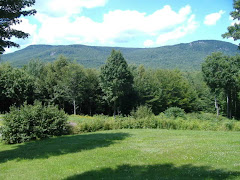
Photos are of Kibby Mountain, Kibby Township, Maine